The Future of Business Discovery
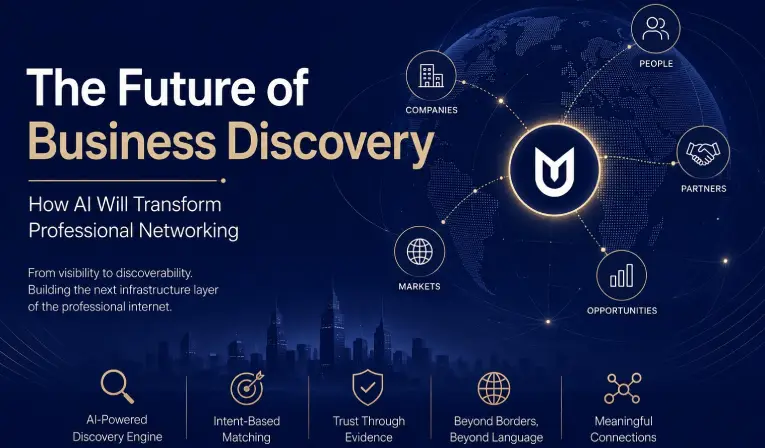
For decades, businesses competed for visibility. The next generation will compete for discoverability. This article explores how AI, context and intent are reshaping professional networking, why search alone is no longer enough and how business discovery is becoming the next infrastructure layer of the professional internet.
The Future of Business Discovery
The next competitive advantage won't come from being seen by more people. It will come from being discovered by the right ones.
Business Networks Are Entering a New Era
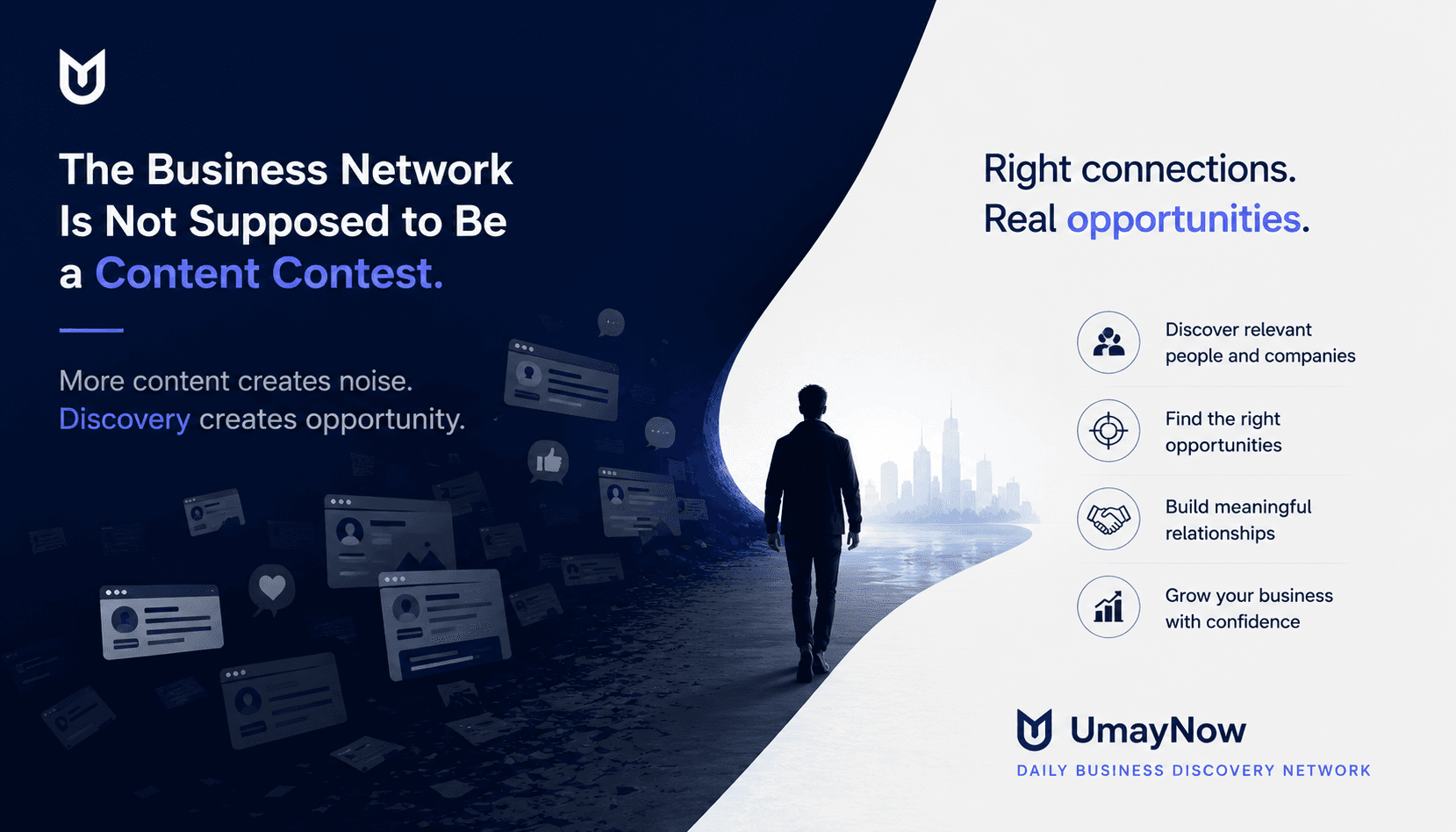
For more than two decades, the internet has rewarded visibility. Company websites, search engines and professional networks transformed the way businesses present themselves to the world, making it easier than ever to showcase expertise, reach new audiences and build credibility. Visibility became the foundation of digital business, and for many years that was enough. Organizations that could effectively communicate their value online gained a clear competitive advantage over those that could not.
Today, that equation is changing. Artificial intelligence has dramatically reduced the cost of creating professional content. A company no longer needs a large marketing department to publish articles, produce videos or share industry insights. Every organization can communicate at scale. As a result, content is no longer scarce. Attention is.
This shift changes the problem businesses need to solve. The challenge is no longer helping companies become visible. It is helping the right companies discover each other when genuine opportunities arise.
Every major transformation of the internet has been driven by abundance. Search engines emerged because information became impossible to organize manually. Social media flourished because publishing became accessible to everyone. Today, AI has made expertise easier to create and distribute than ever before. The next challenge is no longer producing information. It is understanding which companies, capabilities and opportunities are actually relevant. Business discovery is becoming inevitable because the internet has entered its next stage of maturity.
AI Will Shift From Creating Content to Creating Connections
The first wave of AI focused on productivity. It helped businesses write faster, automate repetitive work and produce more content with fewer resources. Reports, proposals, marketing campaigns and presentations that once required weeks can now be created in hours. This has transformed communication, but it has also intensified competition. Every organization is publishing more than ever before, making it increasingly difficult for meaningful expertise to stand out.
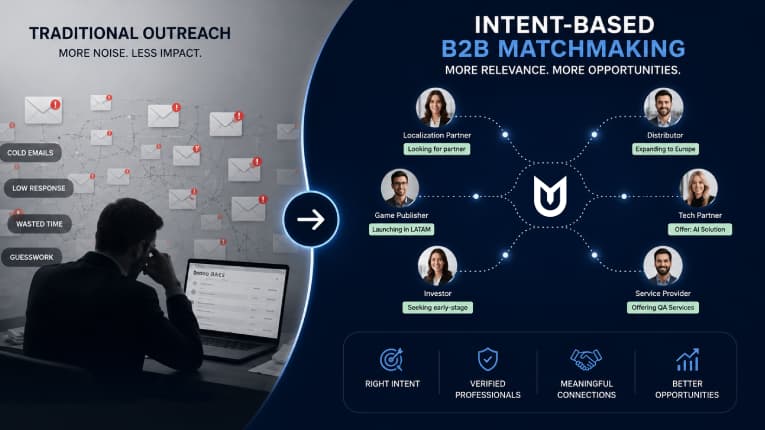
The next wave of AI is likely to be far more valuable. Instead of generating another article or another presentation, intelligent systems will increasingly connect businesses with opportunities they would never have discovered on their own. Rather than recommending another post to read, they will identify a manufacturing partner with proven certifications, a localization agency experienced in a target market or an investor whose portfolio naturally aligns with a company's growth stage.
The greatest contribution of AI to business may not be content creation at all. It may be relationship creation.
Discovery Solves an Information Problem
Economists have long described markets as suffering from asymmetric information. One company may have exactly the expertise another organization needs, yet neither knows the other exists. This is not a failure of capability. It is a failure of information.
Across every industry, thousands of highly specialized businesses remain invisible to the organizations that would value them most. Not because they lack experience or credibility, but because today's digital infrastructure was never designed to surface operational compatibility. Search engines require keywords. Professional networks prioritize visibility. Directories organize categories. None of them truly understand business context.
Imagine a robotics manufacturer in South Korea searching for an agricultural technology partner in Türkiye. Both companies possess complementary expertise, yet neither knows the other exists. Traditional search depends on language, keywords and existing market awareness. Discovery works differently. It recognizes shared capabilities, complementary objectives and operational fit, allowing organizations to find each other without relying solely on identical search terms.
This is why business discovery should not be viewed as an improvement to search. It solves an entirely different problem. Search helps businesses find what they already know they need. Discovery introduces them to opportunities they never knew existed.
Context Will Become the Most Valuable Business Data
Most digital platforms understand what businesses say about themselves. Company profiles describe industries, services and areas of expertise. Websites explain value propositions. Marketing content highlights success stories. Yet these sources capture only a fraction of how organizations actually operate.
The most valuable business information often exists outside public profiles. Completed projects, long-term partnerships, implementation experience, operational capabilities and industry knowledge rarely fit neatly into a company description. They exist across conversations, customer relationships and years of practical execution.
Future discovery platforms will organize this context rather than simply indexing documents. Instead of asking what a company claims to do, they will increasingly understand what that company has demonstrated over time. Experience across industries, verified collaborations and complementary capabilities will become far more meaningful than static profile information.
Trust will evolve in the same direction. It cannot be manufactured through follower counts, endorsements or carefully written testimonials. Real trust emerges through consistent execution, successful collaborations and proven outcomes. Future discovery platforms will not ask businesses to declare credibility. They will recognize trust through evidence, allowing companies to build stronger relationships based on demonstrated experience rather than digital popularity.
Discovery Will Power Entire Business Ecosystems
Business discovery is about far more than finding a supplier or hiring a consultant. Modern companies operate inside complex ecosystems where manufacturers, software vendors, logistics providers, investors, distributors, legal advisors and creative agencies all contribute to the final outcome. Every strategic decision depends on identifying the right combination of capabilities, often across different industries and countries. As these ecosystems become more specialized, discovering the right relationship becomes significantly more valuable than simply expanding a contact list.
The next generation of professional platforms will understand these ecosystems instead of treating companies as isolated profiles. A game studio planning to launch in Japan may require localization, legal compliance, regional marketing, payment integration and publishing support. None of these decisions exist independently. They form a connected business journey. Discovery platforms should recognize these patterns and surface relevant organizations before companies spend weeks searching across multiple platforms. Instead of creating more connections, they will create better ones.
Network Effects Are Being Redefined
For years, technology platforms measured success by the size of their networks. More users meant more content, more engagement and greater value for everyone involved. Professional networking adopted the same philosophy, encouraging businesses to collect followers, expand connections and maximize visibility. Scale became the primary objective because larger networks generally generated more activity.
Business discovery introduces a different type of network effect. Value no longer grows simply because another company joins the platform. It grows because every verified collaboration, successful partnership and completed project enriches the surrounding ecosystem. Each new relationship provides additional context that improves future recommendations. Instead of asking, "How many companies are here?" the more meaningful question becomes, "How well does this network understand how companies work together?" The quality of relationships becomes more valuable than the quantity of profiles.
From Search Engines to Discovery Engines
Search engines transformed the internet by organizing information. They remain one of the greatest technological achievements because they answer questions quickly and efficiently. However, search depends on one important assumption: you already know what you're looking for.
Business rarely works that way.
Organizations often know they want to expand internationally, improve their supply chain or develop a new product, but they don't necessarily know which partner will make that possible. The most valuable opportunity may come from a company they have never heard of, operating in a market they have never explored.
This is where discovery engines represent the next evolution of digital infrastructure. Rather than responding to keywords, they interpret business context. They recognize complementary capabilities, shared objectives and proven experience to introduce organizations that naturally fit together. Search retrieves information. Discovery reveals opportunity. These are not competing ideas. They solve different stages of the same business journey.
Intent Will Become the Most Valuable Business Signal
Every meaningful business relationship begins with intent. A company preparing to enter a new market has different priorities than one investing in automation or preparing for a funding round. Those intentions rarely appear on a website, yet they define which relationships will become valuable over the coming months.
Future discovery platforms will increasingly recognize these signals through changes in hiring, product launches, regional expansion, strategic partnerships and other operational indicators. Rather than describing where a business has been, they will help anticipate where it is going.
Timing will become just as important as relevance. A recommendation delivered six months too early creates little value. The same recommendation delivered one week before a market expansion could transform an entire project. Discovery is not only about finding the right partner. It is about introducing that partner at the moment when collaboration is most likely to succeed.
Discovery Will Become Invisible
The most successful technologies rarely demand attention. They quietly become part of everyday workflows until people stop thinking about them altogether. Email, cloud storage and digital navigation all evolved in this direction. Business discovery is likely to follow the same path.
Imagine opening your workspace on a Monday morning and receiving three recommendations that explain exactly why those organizations matter today. One company recently expanded into a market where your team has extensive experience. Another completed a project that complements your product roadmap. A third is actively searching for capabilities your organization already possesses. You did not search for them. The platform understood the context and surfaced the opportunity before you realized you needed it.
That is the difference between searching for information and discovering opportunity.
Discovery Is the Missing Infrastructure Layer
Today's internet already has remarkable infrastructure. Search engines organize information. Communication platforms enable collaboration. Professional networks help businesses establish visibility. Yet one essential layer is still missing: the ability to understand relationships through business context rather than isolated pieces of information.
Discovery should not be viewed as another application competing for attention. It is better understood as infrastructure. Just as search organizes information and navigation systems organize movement, discovery organizes opportunity. It connects businesses through experience, trust, intent and operational compatibility, allowing organizations to spend less time searching and more time building meaningful partnerships.
Building the Next Generation of Business Discovery
At UmayNow, we believe professional networking is entering its next evolution. The first generation connected people. The second helped businesses become visible. The next generation will help organizations become discoverable when their expertise genuinely matters.
We don't believe discovery replaces search engines, referrals or professional networks. Each continues to solve an important problem. Discovery adds the missing context that connects them together. It transforms isolated information into meaningful business relationships and helps companies identify opportunities that traditional platforms were never designed to reveal.
The future of business will not belong to the companies that publish the most content or collect the largest audiences. It will belong to those that can be discovered by the right partners, at the right moment and for the right opportunity.
The professional internet helped businesses become visible.
The next generation will help them become discoverable.
That shift may define the next decade of global business, and it is the future we are building at UmayNow.