Why Company Verification Matters in B2B Discovery
Learn why company verification is essential for modern B2B discovery, how it improves data quality, reduces fraud, and helps businesses identify trustworthy partners.
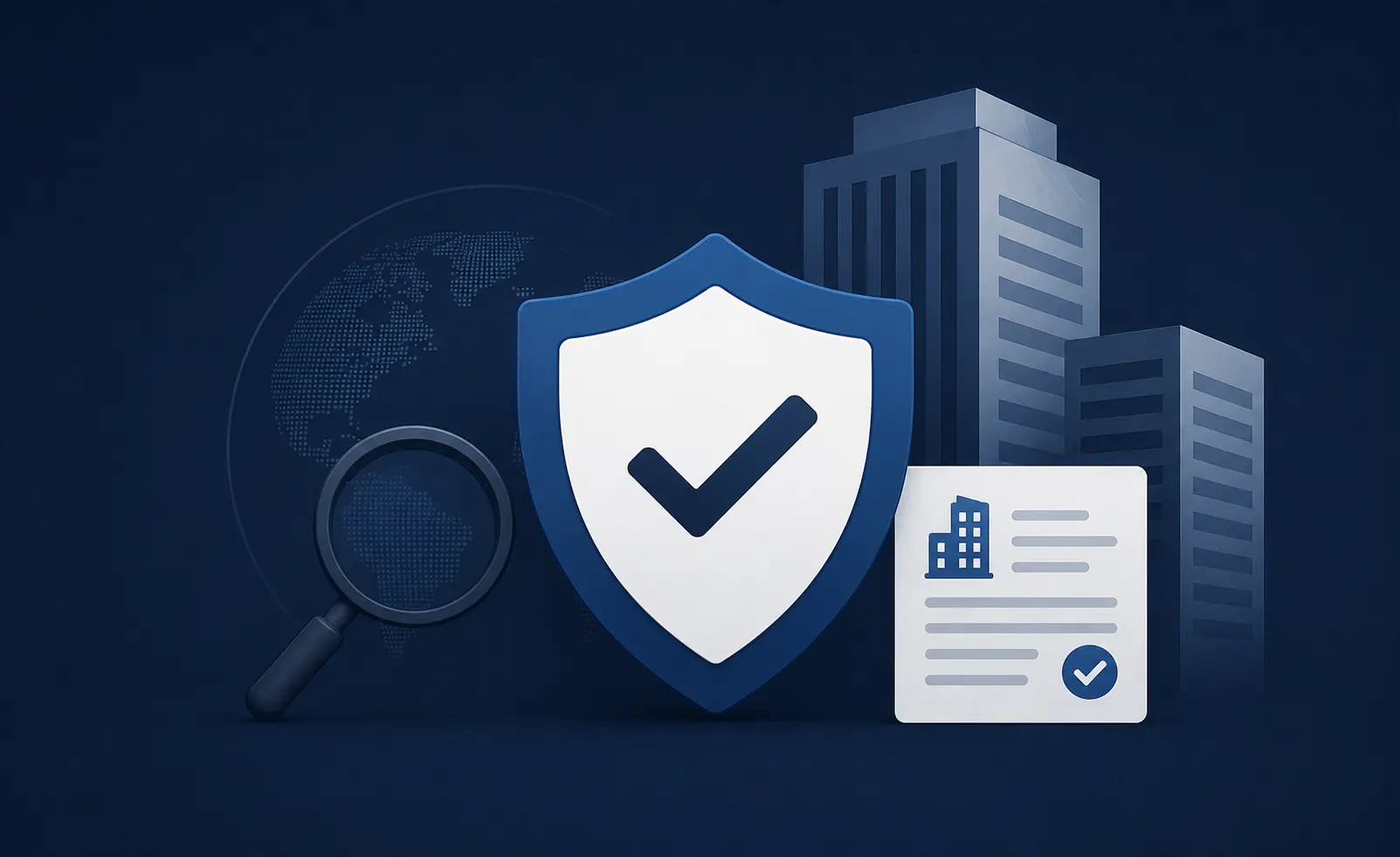
Every B2B relationship starts with a simple question: Can I trust this company?
Whether you’re looking for a supplier, customer, investor, publisher, technology partner, or service provider, verifying that a business is legitimate is one of the first steps before any meaningful conversation begins. In today’s digital economy, where AI-generated profiles, fake vendors, duplicate listings, and outdated company information are becoming increasingly common, company verification has become an essential part of modern B2B discovery.
Businesses no longer want to spend time filtering unreliable profiles or validating basic information manually. They want confidence before they invest their time, resources, or reputation.
Key Takeaways
Company verification confirms that a business is legitimate and accurately represented.
Verification reduces fraud, duplicate listings, and unreliable business data.
Verified business information improves the quality of B2B discovery and matching.
Verification builds confidence, while trust requires additional business signals beyond identity alone.
What Is B2B Company Verification?
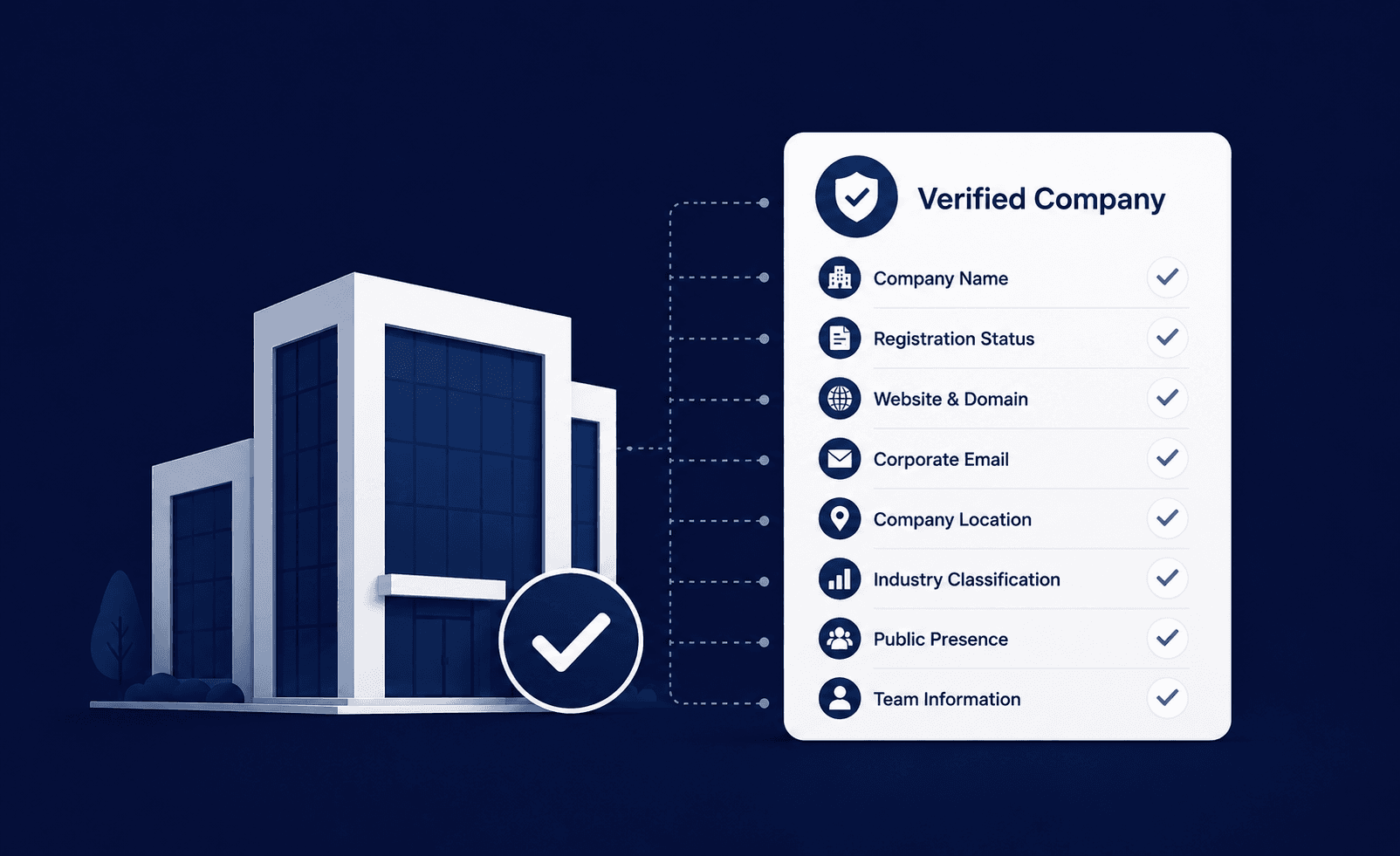
Company verification is the process of confirming that a business is legitimate and that its core information is accurate, current, and trustworthy.
A verification process typically validates information such as:
Company name
Registration status
Website and domain ownership
Corporate email addresses
Company location
Industry classification
Public business presence
Team information
Modern B2B platforms often go beyond a simple verification badge. They combine multiple verification methods to help determine whether a company is genuine, active, and accurately represented.
The objective is straightforward: reduce uncertainty and enable businesses to make faster, more informed decisions.
Why Company Verification Matters in B2B Discovery
B2B relationships involve significantly higher stakes than most consumer transactions.
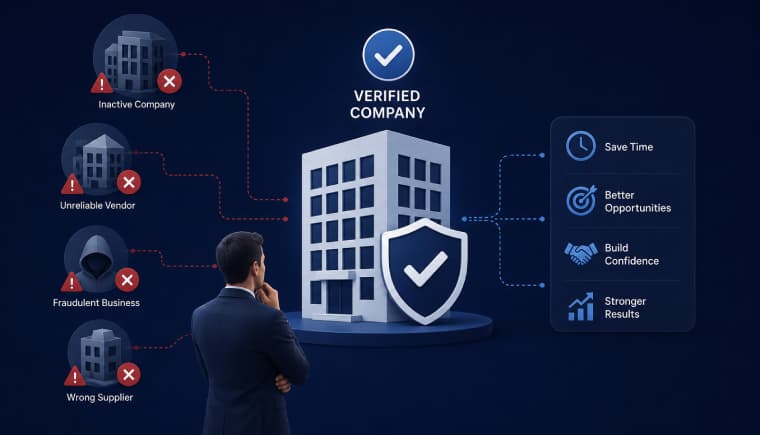
Choosing the wrong supplier, contacting an inactive company, partnering with an unreliable vendor, or engaging with fraudulent businesses can result in lost revenue, wasted time, damaged reputation, and missed opportunities.
That is why company verification has become an important foundation for modern B2B discovery.
When businesses can quickly identify verified companies, they spend less time validating information and more time evaluating opportunities that genuinely fit their objectives. Verification creates confidence before the first conversation even begins, making business discovery faster and more reliable.
The Hidden Costs of Unverified Business Data
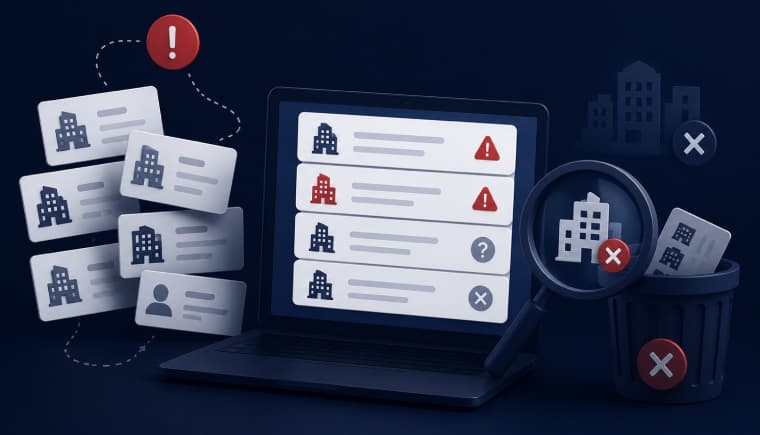
Without a reliable verification layer, B2B platforms gradually become filled with inaccurate or low-quality information.
Duplicate company profiles
The same business may appear multiple times under different names or outdated information, making it difficult to identify the official company profile.
Fake vendors and misleading companies
Some profiles represent businesses that never existed, exaggerate their capabilities, or intentionally mislead potential partners.
Outdated contact information
Inactive websites, obsolete email addresses, and former employees create unnecessary friction during outreach.
Low-intent or spam listings
Many directories prioritize quantity over quality, allowing inactive or promotional profiles to overwhelm legitimate business opportunities.
Inactive companies
A company may legally exist but no longer operate in the market or actively seek new partnerships.
These problems increase friction throughout the discovery process. Instead of helping businesses discover opportunities, platforms force users to verify information themselves before meaningful engagement can begin.
How Company Verification Improves Business Discovery
Verification is often viewed as a security feature, but its value extends much further.
Accurate company data directly improves the quality of B2B discovery.
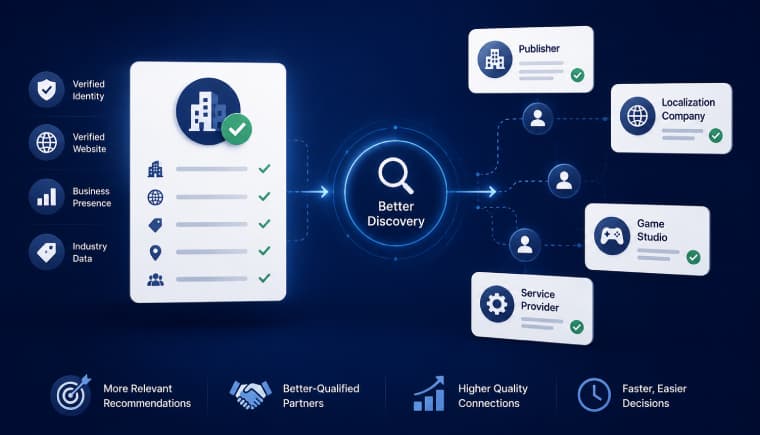
When a platform understands a company’s verified identity, industry, website, and business presence, it can surface more relevant recommendations and connect organizations with better-qualified partners.
For example, a verified game studio is easier for publishers to evaluate. A verified localization company can be recommended to studios expanding into new markets. Verified service providers become more discoverable because their core business information has already been validated.
Instead of relying exclusively on keywords, modern discovery platforms can connect businesses using reliable company data and verified business signals.
What Strong Company Verification Should Include
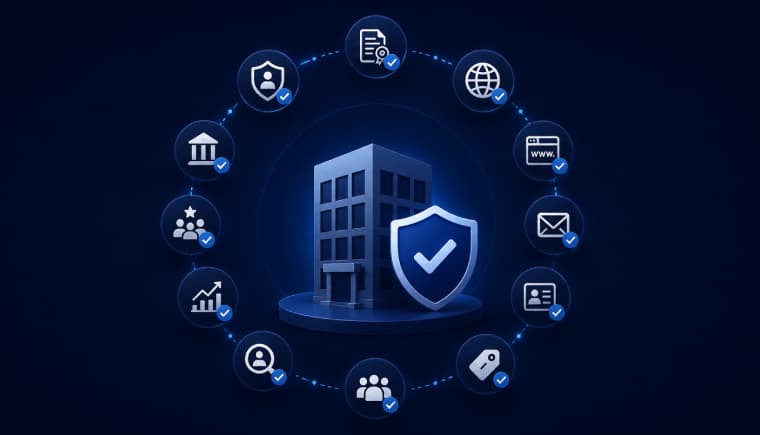
A robust verification process combines multiple validation methods rather than relying on a single check.
A comprehensive verification system may include:
Business registration verification
Website validation
Domain ownership verification
Corporate email verification
Public business profile review
Industry classification validation
Manual review for higher-risk businesses
Business activity indicators
Community feedback
Long-term trust signals
The objective is not simply to prove that a company exists. It is to demonstrate that the company is active, relevant, and credible.
The Limitations of Company Verification
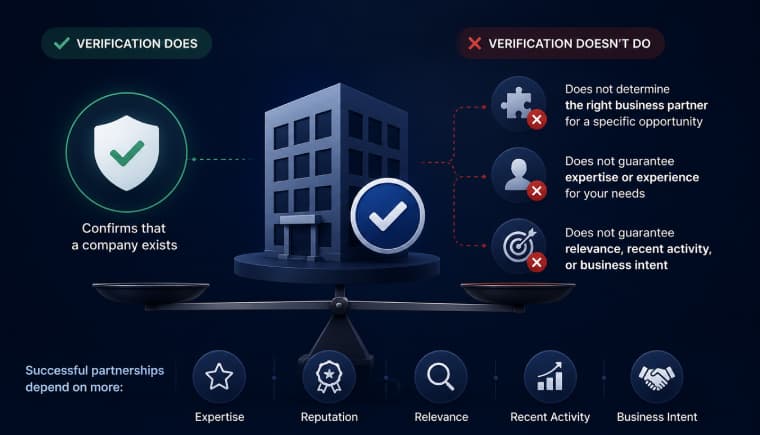
Although company verification is essential, it does not answer every question.
Verification confirms that a company exists.
It does not automatically determine whether that company is the right business partner for a specific opportunity.
A verified supplier may still not be the best supplier.
A verified publisher may not be the right publisher for a particular game.
A verified agency may not have the experience required for a specialized project.
Verification reduces uncertainty, but successful business relationships depend on additional factors including expertise, reputation, relevance, recent activity, and business intent.
Verification Builds Confidence. Trust Builds Partnerships.
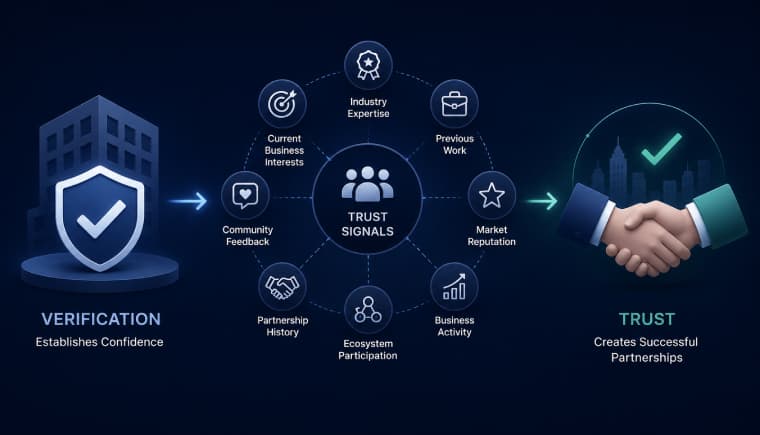
Modern B2B discovery requires more than confirming company identities.
Businesses also evaluate signals such as:
Industry expertise
Previous work
Market reputation
Business activity
Ecosystem participation
Partnership history
Community feedback
Current business interests
These signals help organizations understand not only whether a company is legitimate, but whether it is the right company for a particular opportunity.
Verification establishes confidence.
Trust creates successful partnerships.
Best Practices for Verifying a Company
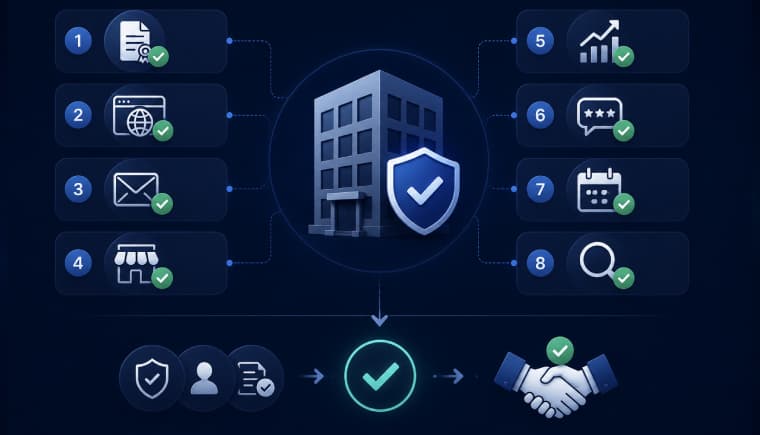
Before starting a business relationship, it is worth reviewing several verification signals.
Confirm the company’s registration details.
Review its official website.
Verify domain ownership and corporate email addresses.
Check whether the business is actively operating.
Evaluate its public reputation.
Review recent activity and business presence.
Confirm that contact information is current.
Compare information across multiple trusted sources.
No single signal guarantees trust, but combining multiple verification methods significantly reduces risk and improves decision-making.
Frequently Asked Questions
What is company verification?
Company verification is the process of confirming that a business is legitimate and that its essential information, including registration, website, domain, and contact details, is accurate and up to date.
Why is company verification important in B2B?
Company verification helps businesses reduce fraud, eliminate fake or inactive companies, improve trust, and make more informed partnership decisions before engagement begins.
What information is typically verified?
Most verification systems validate company registration, website, domain ownership, business email addresses, location, industry classification, and other core business identity signals.
Is company verification enough to build trust?
No. Verification confirms that a company is legitimate, but trust also depends on factors such as reputation, expertise, activity, relevance, and the context of a specific business opportunity.
Final Thoughts
As B2B ecosystems continue to grow, company verification is becoming a fundamental requirement for effective business discovery.
Verification improves data quality, reduces uncertainty, and helps businesses identify legitimate organizations more efficiently. It creates a stronger foundation for partnerships by filtering unreliable information before engagement begins.
However, the future of B2B discovery goes beyond verification alone. The most valuable business networks will combine verified company data with richer trust signals that help organizations identify not only legitimate companies, but the right companies for every opportunity. To see how verification works together with intent to improve business discovery, read our article, How Verification & Intent Matching Replace Search in Business Discovery.