The AI Content Problem
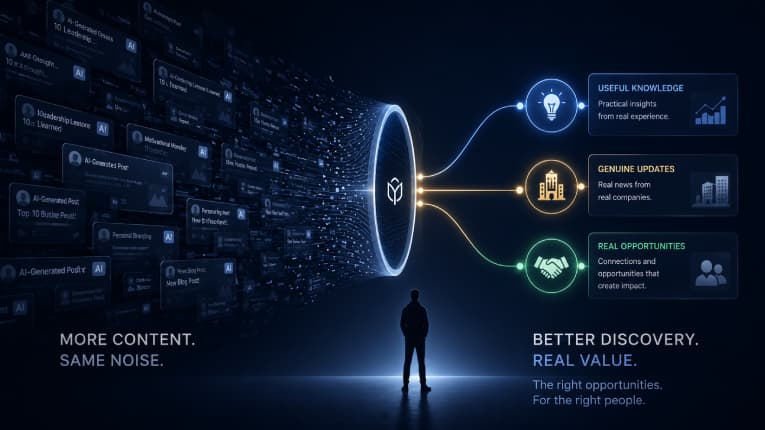
AI has made professional content easier to create than ever before. But as AI-generated posts and self-promotion flood professional networks, discovering trustworthy knowledge and genuine business opportunities becomes increasingly difficult.

Artificial intelligence has quietly become part of everyday business. It writes emails, summarizes meetings, creates presentations and increasingly creates the content we see on professional networks. LinkedIn posts, company announcements, newsletters, job descriptions and even personal stories are now regularly written with AI. In many cases, we can no longer tell the difference between something written from experience and something generated in seconds.
That isn't necessarily a problem.
AI is one of the most useful productivity tools available today. It helps people communicate ideas they might otherwise struggle to express, gives small businesses access to better marketing and allows professionals to spend less time writing and more time doing meaningful work. Used well, it improves the quality of communication.
The problem begins when communication stops being the objective and visibility becomes the objective instead.
Visibility Became More Valuable Than Value
Professional networks were originally designed to help people build relationships, share knowledge and discover opportunities. Over time, however, they evolved into platforms where attention became the currency.
The more visible you are, the more likely you are to be noticed. The more you're noticed, the more opportunities you might receive. Once that incentive exists, publishing becomes less about contributing something useful and more about staying in front of the algorithm.
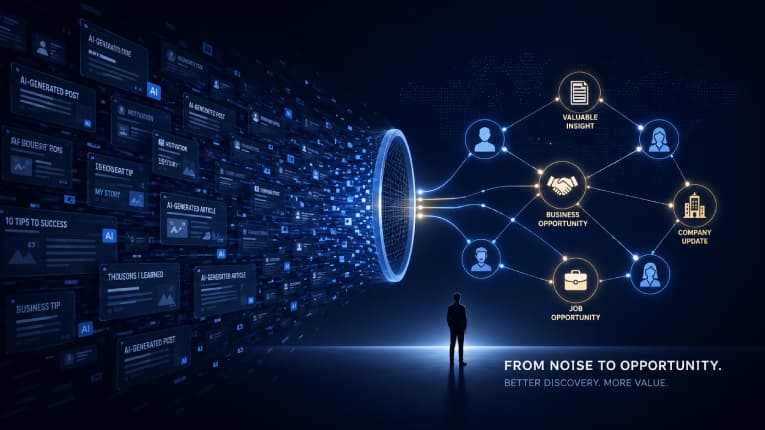
The result is familiar to anyone who opens LinkedIn today. AI-generated founder stories, motivational lessons, personal branding posts, recycled business advice and carefully optimized self-promotion fill professional feeds every day. Some of it is authentic, some of it is generated and much of it exists for one reason only: to remain visible.
The same pattern extends beyond the feed. Companies leave job postings online long after hiring has ended. Old announcements continue circulating. Business updates lose relevance but remain discoverable because no system distinguishes fresh information from outdated information. The result is a professional feed where staying visible often matters more than sharing something valuable.

More Content Doesn't Create More Trust
As AI continues lowering the cost of creating content, professional feeds become increasingly crowded. Publishing has never been easier, but evaluating what deserves our attention has never been more difficult. As more content appears, professionals spend less time finding information and more time deciding whether they can trust it.
The question is no longer, "Can I find information?"
The question is, "Can I trust what I'm seeing?"
That's a much harder problem to solve.

A Different Incentive
At UmayNow, we don't believe professional networks should reward whoever publishes the most content. We also don't believe detecting AI is the answer. AI will continue improving and eventually the distinction between human-written and AI-assisted content may become meaningless.
What matters is whether a contribution creates professional value. Does it share useful knowledge, announce a genuine business update or introduce a real opportunity? Or is it simply another post created to attract attention? Those are the questions we believe should determine discovery.
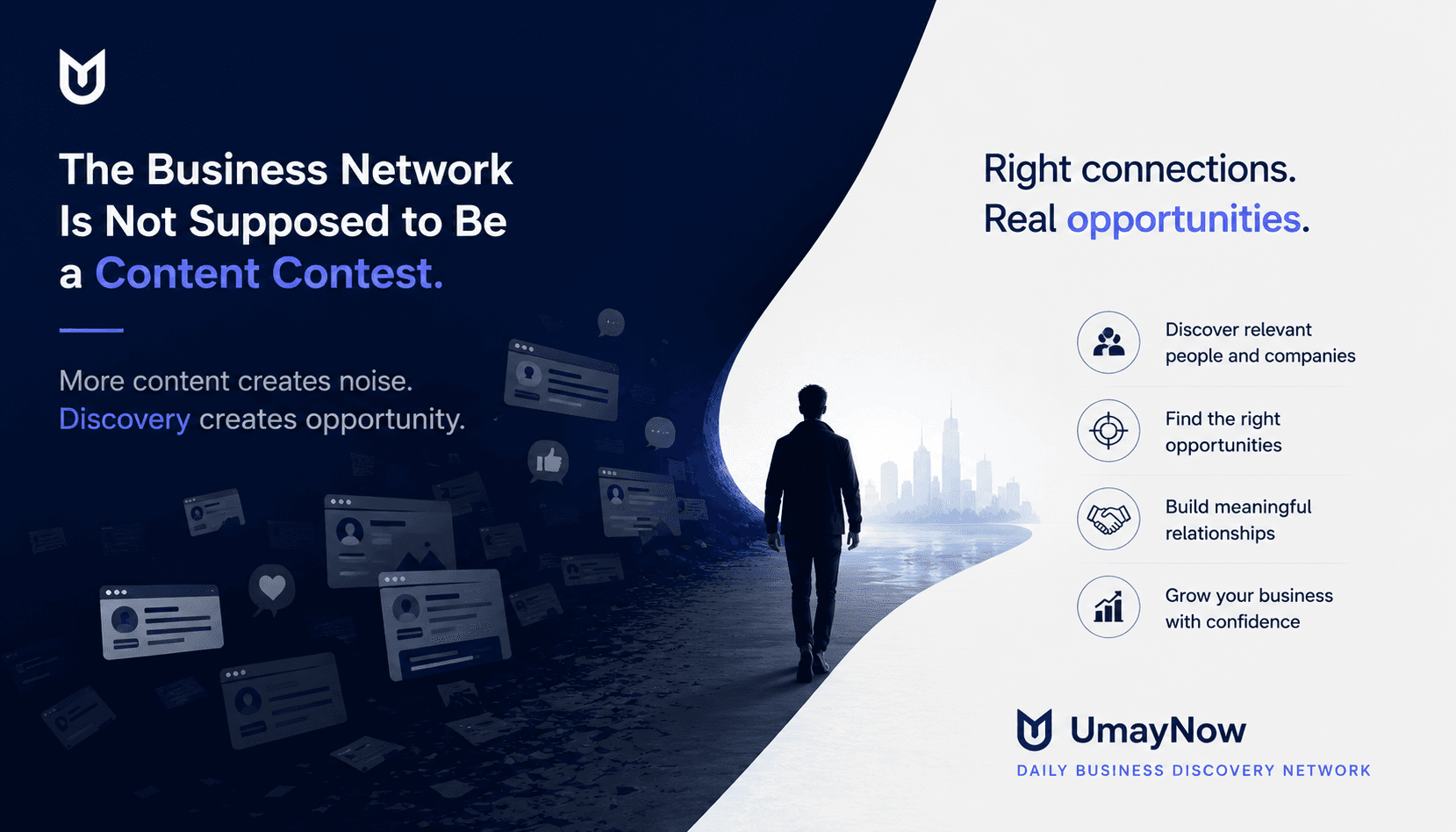
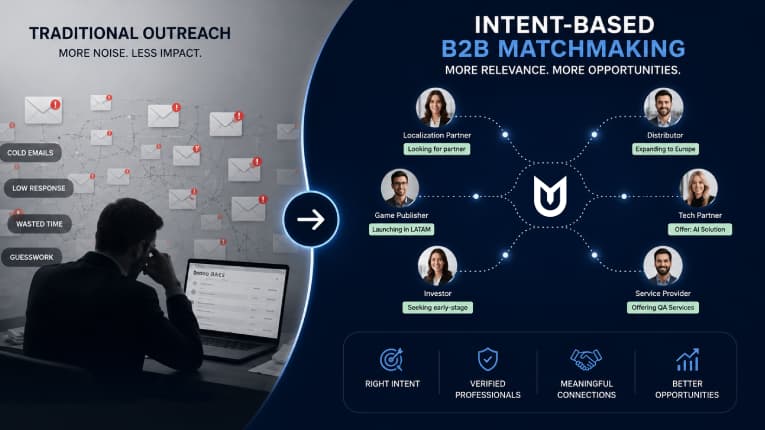
The purpose of a professional network shouldn't be endless content consumption. It should be business discovery. Helping the right professionals discover the right people, companies, knowledge and opportunities at the right time creates far more value than encouraging everyone to publish more content.
Discovery Should Be Protected by the Community
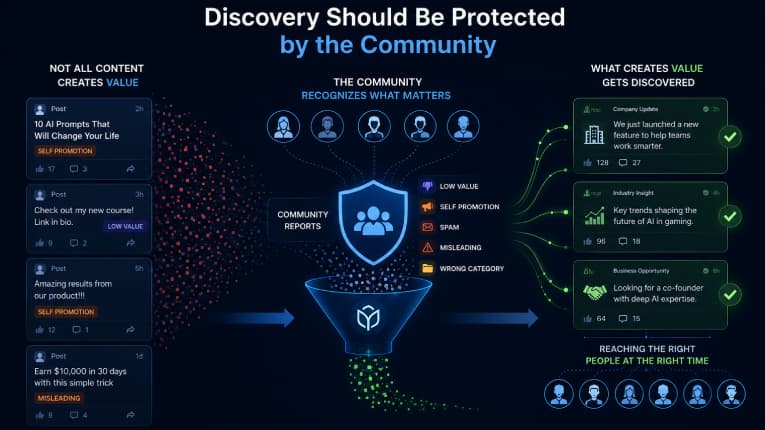
Algorithms can measure engagement, but they cannot always measure professional value. The people working inside an industry are often better judges of what is useful than any ranking system.
For that reason, Community Reports are part of how discovery works on UmayNow. Professionals can report posts as Low Value, Self Promotion, Spam, Misleading or Wrong Category. Those reports become part of a contributor's trust signals rather than simple moderation reports. Instead of immediately removing content, the platform gradually reduces its visibility when the community consistently agrees that it contributes little to meaningful professional discovery.
Those trust signals also influence future distribution. Professionals who repeatedly publish low-value or attention-driven content don't lose the ability to post, but their future content has to earn visibility through relevance instead of activity. Likewise, professionals who consistently share valuable knowledge, genuine company updates and real business opportunities gradually build stronger trust, allowing their future contributions to reach more relevant professionals over time.
The objective isn't to punish people for using AI.
The objective is to reward people for creating value.
The Same Principle Applies to Opportunities
Business opportunities deserve the same level of trust as business content.
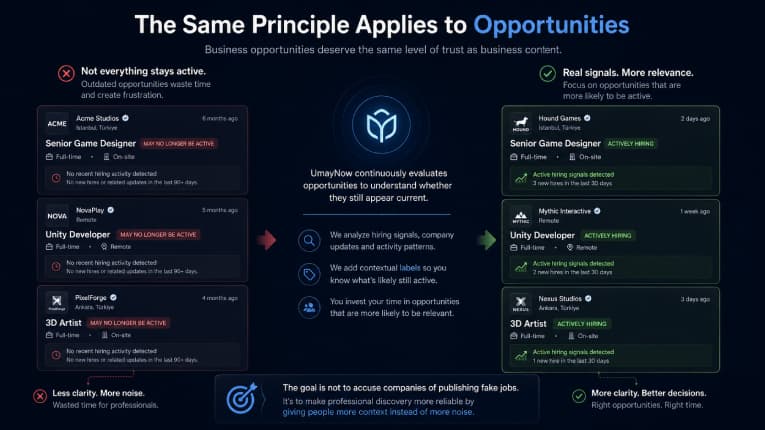
A job posting shouldn't remain equally visible six months after it was published if there are no signs that hiring is still active. Instead of assuming every opportunity stays relevant forever, UmayNow continuously evaluates whether listings still appear current. When hiring activity appears to have stopped, contextual labels help professionals understand that an opportunity may no longer be active before they invest their time.
The goal isn't to accuse companies of publishing fake jobs. It's to make professional discovery more reliable by giving people more context instead of more noise.
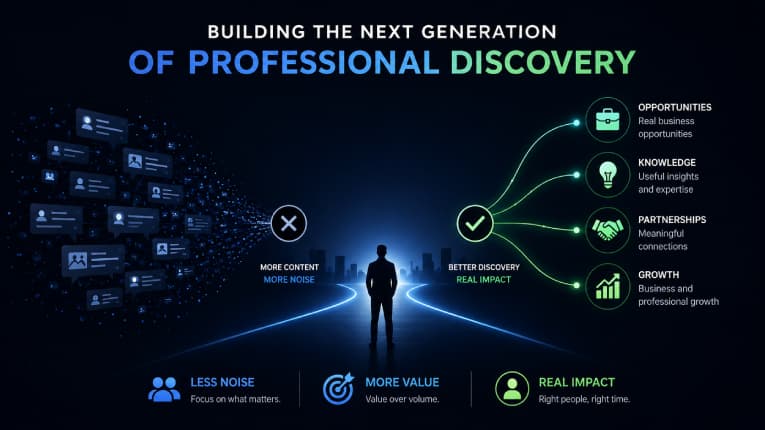
Building the Next Generation of Professional Discovery
Artificial intelligence will continue changing how businesses communicate. Content will become easier to produce, easier to personalize and almost impossible to distinguish from human writing. That's not something professional networks should fear. It's something they should adapt to.
At UmayNow, we don't want professionals to feel pressured to publish every day just to stay relevant. We want them to share something when they genuinely have knowledge to contribute, a business update worth announcing or an opportunity worth discovering.
We believe the next generation of professional networking won't be defined by who creates the most content. It will be defined by who creates the most value and how easily that value can be discovered by the professionals who actually need it.