How AI Search Is Changing B2B Business Discovery
AI search is changing where B2B discovery begins. As buyers increasingly use AI to research companies and build shortlists, relevance, intent and trust are becoming more important than search visibility alone.

For years, business discovery followed a familiar path: search, click, compare, shortlist. That process is changing. In 2026, 51% of B2B software buyers say they start their research with an AI chatbot more often than with Google, while 94% of B2B buyers report using AI during the buying process. AI is not simply changing search. It is changing where business discovery begins.
The Traditional Discovery Process Is Changing
The web was built around a relatively simple discovery model. Someone had a question, a search engine returned a set of results and the person opened websites to find the answer. From there, they compared companies, products or services and gradually built a shortlist.
The important part of that process was that the user did most of the interpretation. Search engines could help find information, but the buyer had to determine what was relevant, what was credible and what actually matched their needs.
AI search changes where some of that work happens. Instead of constructing a series of keyword searches, a buyer can describe a business problem in natural language and ask for relevant options. The system can interpret the request, combine information from multiple sources and present an answer that is already shaped around the user's intent.
That is more than a different interface for search. It changes the starting point of discovery.
B2B Research Is Moving Toward AI
The shift is already visible in B2B buying behavior. G2's 2026 AI Search Insights Report found that 51% of B2B software buyers prefer starting their research with AI chatbots more often than with Google, compared with 29% the year before. The same research found that 71% of buyers use AI chatbots at some point during their research process.
Forrester reported a similarly significant shift from another perspective: 94% of B2B buyers use AI during the buying process. That does not mean that traditional search, company websites or human research have disappeared. It means AI has become part of the process at a scale that businesses can no longer treat as experimental.
The important distinction is between using AI during research and starting research with AI. The first describes how deeply AI has entered the buying journey. The second tells us something about where discovery itself is beginning to move.
Together, they point toward a broader change: business buyers are increasingly asking systems to help them interpret the market before they decide which companies deserve closer attention.
Search Was Built Around Results. AI Is Moving Toward Relevance.
Traditional search is fundamentally a retrieval model. You enter a query and receive pages that may contain information related to that query. The system helps you find the material. You decide what it means.
AI-assisted search can move part of that interpretation upstream.
Consider the difference between searching for "mobile game development studio" and asking, "Which game development companies have experience with mobile live-service games and could work with a studio entering Asian markets?"
The second request contains intent, context and constraints. It is not simply looking for pages containing a phrase. It is asking for relevance.
This is the deeper change taking place in search. The web is moving from a model where users primarily discover information toward one where systems can increasingly help them discover options.
That distinction matters enormously in B2B, where the value of a search is rarely the information itself. The value is finding the right company, person, supplier, partner, investor or capability.
The Shortlist Can Form Before the Website Visit
For years, businesses competed for visibility because visibility created the opportunity to enter the buyer's research process.
The journey was relatively straightforward: search, results, website visits, research, comparison and shortlist.
AI-assisted discovery can move the shortlist further upstream. A buyer can describe what they need and receive a set of companies or options before visiting individual websites.
The website still matters. In many cases, it may become even more important as a source of verification and deeper research. But it does not necessarily have to be the first place where discovery happens.
That changes the question businesses need to ask.
It is no longer only, "How do we get someone to visit our website?"
It is increasingly, "Will our business be considered relevant before someone decides to visit our website?"
Being Found Is Not the Same as Being Relevant
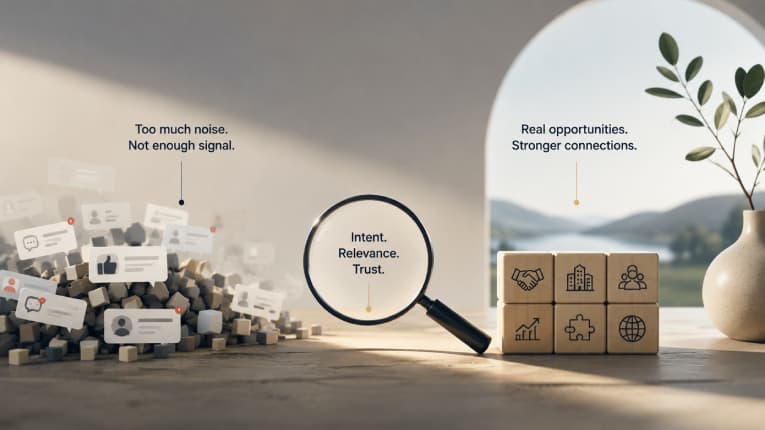
A company can rank well for a keyword and still be a poor fit for the person searching. Another company can have exactly the capability a buyer needs but remain difficult to discover because its information is fragmented across websites, directories, social profiles and other platforms.
Being present on the internet is not the same as being understandable.
A business has an identity, capabilities, industries, services, requirements and relationships. Those signals collectively describe where that business fits within a larger ecosystem. When those signals are incomplete or disconnected, it becomes harder for both people and machines to determine relevance.
This is why business discovery is different from visibility alone.
The question is not simply whether someone can find a company. The more useful question is whether they can understand what that company does, what it offers, what it needs and whether it is relevant to the problem they are trying to solve.
From Content Discovery to Business Discovery
Much of digital marketing has been built around content. Create a page, target a keyword, build authority, earn visibility and bring the visitor to the website.
That model remains useful, but it was designed around a web where the primary unit of discovery was the page.
Business discovery is different because the primary unit is the opportunity.
A company may be looking for a supplier. A professional may be looking for a business partner. A startup may be looking for an investor. A game studio may be looking for a publisher. A company may need a capability that does not exist inside its current team.
These are not simply information queries. They are expressions of intent.
The more specific the intent becomes, the more important relevance becomes. "I need a publisher" describes a broad category. "I need a publisher for a narrative-driven PC game with international distribution experience" describes a business requirement.
Likewise, "I offer localization" communicates very little compared with "I provide Japanese and Korean localization for mobile games entering East Asian markets."
The difference is not simply better content. It is better representation of intent.
AI Is Accelerating the Shift, Not Creating It Alone
It would be easy to frame this entirely as an AI story. That would miss the larger change.
AI makes natural-language discovery more practical because it can interpret complex requests and synthesize information from multiple sources. But AI does not solve the underlying discovery problem by itself.
The quality of an answer still depends on the quality, consistency and context of the information available to the system.
If a company has an excellent product but its capabilities are poorly represented, an AI system may struggle to connect that company with the right opportunity. If a professional has a highly relevant capability but there is no clear signal about what they offer or what they are looking for, that opportunity can remain invisible.
The future of discovery is therefore not simply about producing more content for AI systems to read. It is about creating better signals for discovery itself.
Trust Still Matters After the AI Answer
There is another important part of this transition that is easy to overlook: AI does not eliminate the need for trust.
Forrester's 2026 research found that B2B buyers increasingly use AI but still rely on trusted sources to validate what they discover. Other B2B research similarly indicates that buyers frequently fact-check AI-generated information during their research.
This creates an important dynamic.
AI can help create the shortlist. Trust helps determine what survives it.
That means businesses cannot simply aim to appear in an AI-generated answer. The information behind that answer needs to be clear, consistent and credible enough to withstand the next stage of research.
AI-assisted discovery may reduce the amount of manual searching a buyer has to do, but it does not remove the need to understand and verify the businesses being considered.
The Importance of Intent
This is why the shift toward AI search matters beyond search engine optimization.
Traditional SEO focuses heavily on queries, pages, rankings and traffic. Those things still matter, but they do not fully describe how business relationships begin.
Business relationships often begin with intent.
Someone needs something. Someone else can provide it. The opportunity exists when those two sides become relevant to each other.
AI makes it easier for people to express that intent in natural language. The larger opportunity is connecting that intent with the right people, companies and capabilities.
That creates a different model of discovery:
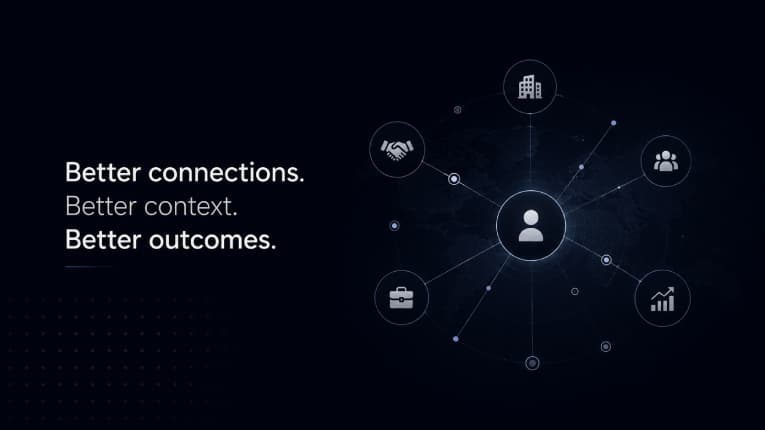
Intent → Relevance → Discovery → Opportunity
The first step is understanding what someone needs. The second is determining what is relevant. The third is making relevant people, companies or capabilities discoverable. The fourth is turning that discovery into an actual opportunity.
This is a fundamentally different way of thinking about the business internet.
The Next Layer of Business Discovery
The internet has become extremely good at helping people find information. The next challenge is helping people find the right business opportunity.
AI search is one of the forces pushing that change forward. It is making discovery more conversational, more contextual and less dependent on the user knowing exactly which keywords to type.
But the opportunity goes beyond making search better.
It is about making discovery more relevant.
That is the direction UmayNow is building toward. UmayNow is a Business Discovery Layer for professionals and companies, built around what people and businesses need, what they offer and where those signals can create relevant opportunities.
The shift toward AI-assisted search is therefore not simply a story about ChatGPT, Google or the next generation of search engines. It is part of a broader change in how the internet connects demand with supply.
For decades, the web has largely been organized around information, content and attention. The next layer can be organized around intent, relevance and opportunity.
AI is changing how people search. The more important question is what comes next: how will the internet help the right businesses discover each other?
UmayNow is building a Business Discovery Layer for professionals and companies. Instead of competing for attention through content, UmayNow helps businesses become discoverable based on what they need, what they offer and where those signals create relevant opportunities. Verify your company on UmayNow to ensure your business is visible in the age of AI-assisted discovery.