Yapay Zeka Aramasında Görünen B2B İçeriği Nasıl Yazılır
Yapay zeka araması, B2B içeriğinin nasıl keşfedildiğini değiştiriyor. Hem yapay zeka arama sistemleri hem de onları kullanan insanlar için işe yarayan faydalı, özgün ve güvenilir içerik oluşturmayı öğrenin.
Yapay Zeka Aramasında Gerçekten Görünen B2B İçeriği Nasıl Yazılır
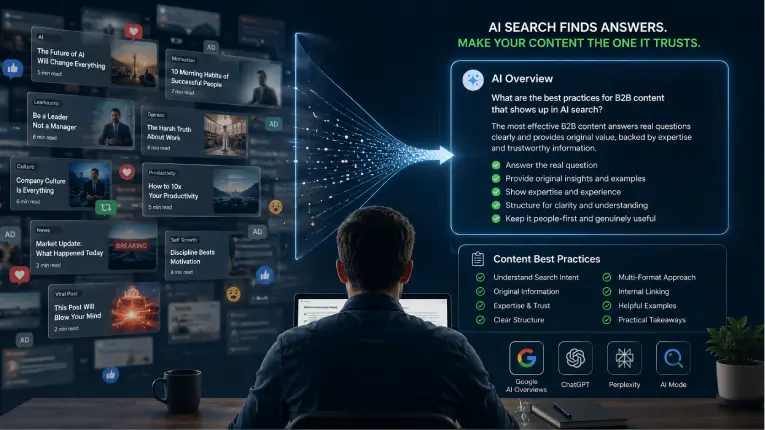
Yapay zeka araması B2B keşfini değiştiriyor. İnsanlar artık Google'a, ChatGPT'ye ya da Perplexity'ye çok daha spesifik sorular sorabiliyor ve bir sayfa listesi yerine bir cevap bekliyor. İşletmeler için bu yeni bir içerik zorluğu yaratıyor: artık bir anahtar kelimeyi hedeflemek ve doğru okuyucunun tıklamasını ummak yeterli değil. İçeriğinizin, hem arama yapan kişi hem de sorguyu yorumlayan sistemler için faydalı olacak kadar net bir şekilde altta yatan soruyu yanıtlaması gerekiyor.
Bu, geleneksel SEO'nun öldüğü anlamına gelmiyor. Google, mevcut SEO temellerinin hâlâ Yapay Zeka Özetleri ve Yapay Zeka Modu için de geçerli olduğunu söylüyor ve dahil edilmeyi garanti eden özel bir işaretleme ya da ayrı bir teknik gereklilik yok. Daha faydalı değişim, sadece sıralamaları düşünmekten, içeriğinizin net, güvenilir ve faydalı bir cevap sunup sunmadığını düşünmeye geçmek.
Yapay Zeka Araması B2B İçeriğini Neden Değiştiriyor
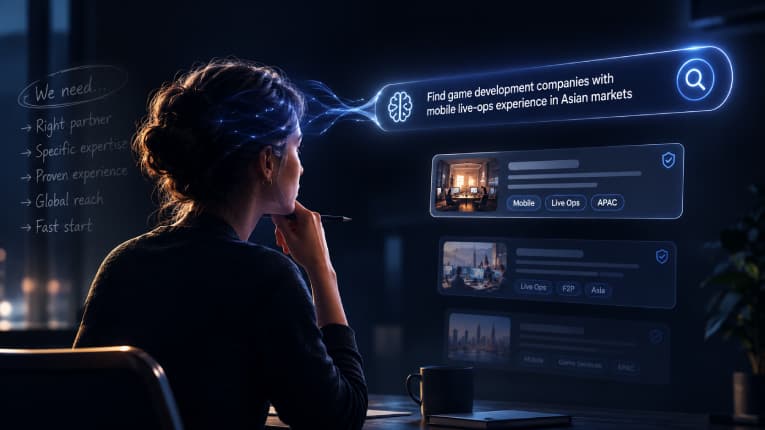
Geleneksel arama genellikle kısa bir sorguyla başlar. Biri "B2B CRM" ya da "Avrupa'da oyun geliştirme stüdyosu" diye arama yapıp sonra sonuçları karşılaştırabilir. Yapay zeka araması, o sorgunun arkasındaki gerçek durumu ifade etmeyi kolaylaştırır.
Bir alıcı bunun yerine, uluslararası bir satış ekibine sahip 20 kişilik bir teknoloji şirketi için hangi CRM'nin uygun olduğunu sorabilir. Bir stüdyo, Unreal Engine deneyimine sahip Avrupalı bir ortak geliştirme ortağı arıyor olabilir. Bu sorular, tek bir anahtar kelimenin ifade edebileceğinden daha fazla bağlam içerir.
Bu bağlam, iyi içeriğin ne yapması gerektiğini değiştirir. Hedef ifadeyi tekrarlamak yerine, faydalı bir makale onun arkasındaki gerçek kararı ele almalı. Okuyucunun bilmesi gereken nedir? Hangi seçenekleri karşılaştırıyor? Hangi kısıtlamalar önemli? Karar vermelerine hangi kanıt yardımcı olur? En iyi B2B içeriği buradan başlar.
İçeriği Gerçek Sorular Etrafında Yapılandırın
Yapay zeka sistemlerinin faydalı bilgiyi belirlemesi gerekir ama bu, sadece "yapay zeka dostu" olmaları gerektiği için bir makaleyi H2'lerle, madde işaretleriyle ve SSS'lerle doldurmak anlamına gelmez. Yapı, konunun mantığını yansıttığında faydalıdır.
Makalenizin yanıtladığı soruyla başlayın. Okuyucuya erkenden net bir cevap ya da tez verin, sonra bunu anlamak için gereken bağlamı, kanıtı ve örnekleri sunun. Konu gerçekten değiştiğinde başlıklar kullanın. Birkaç öğenin karşılaştırılması gerektiğinde listeler kullanın. Bir karşılaştırmayı o formatta anlamak daha kolay olduğunda tablolar kullanın.
Amaç bir makaleyi makine tarafından okunabilir göstermek değil. Amaç, bilgiyi anlaşılması kolay hale getirmek.
Bu ayrım önemli çünkü üretici arama sistemleri, daha büyük belgelerden belirli bilgi parçalarını giderek daha fazla almaya ihtiyaç duyuyor. Üretici arama alıntıları üzerine yapılan araştırmalar, anlamsal ilgililiğin ve gerçekler, tanımlar ve karşılaştırmalar gibi faydalı, çıkarılabilir bilginin kaynakların nasıl kullanıldığını etkileyebileceğini ortaya koydu. Yapı yardımcı olur ama içerik olmadan yapı yeterli değildir.
Özgün Bilgi Bir Rekabet Avantajıdır
İnternet zaten aynı B2B konularını açıklayan binlerce makale içeriyor. Bir Gartner raporunun başka bir genel özeti ya da "2026 için 10 trend"in başka bir listesi, okuyucuya şirketinizi hatırlaması için nadiren bir neden verir. Yapay zeka içeriği üretmeyi kolaylaştırıp ayırt etmeyi zorlaştırdıkça bu sorun daha da belirgin hale geliyor. Dikkat Yerine Keşif
Özgünlük büyük bir araştırma bütçesi gerektirmez. İç bir analizden, bir müşteri gözleminden, bir vaka çalışmasından, deneyimden geliştirilmiş bir çerçeveden ya da özgün araştırmadan gelebilir. Önemli olan makalenin, bir okuyucunun arama sonuçlarının ilk sayfasında bulabileceğinin ötesinde bir şey katmasıdır.
Şirketlerin özel verilere karşı dikkatli olması gereken nokta da tam olarak burası. Kendi işinizden gerçek sayılarınız varsa, onları kullanın. Yoksa, bir makaleyi otoriter göstermek için onları uydurmayın. Güvenilir bir gözlem, uydurma bir istatistikten daha değerlidir.
Uzmanlık Görünür Olmalı
B2B içeriği genellikle para, risk ve uzun vadeli ilişkileri içeren kararları etkiler. Okuyucuların bilgiye neden güvenmeleri gerektiğini bilmesi gerekir. Keşfedilen şeyin bilgi değil de bir şirket ya da potansiyel bir iş ortağı olduğu durumlarda da aynı ilke geçerlidir. Şirket Doğrulaması B2B Keşfinde Neden Önemli
Gerçek bir yazar, ilgili bir biyografi ve yazarın deneyiminin net bir açıklaması faydalı bir bağlam sağlayabilir. Bir makale bir şirketin doğrudan deneyimine dayanıyorsa, bunu belirtin. Önemli bir iddia dış araştırmadan geliyorsa, orijinal kaynağa bağlantı verin.
Amaç bir algoritma için "uzman sinyali" uydurmak değil. Amaç kaynağı okuyucu için hesap verebilir ve anlaşılır hale getirmek.
Sadece Anahtar Kelimeler İçin Değil, Niyet İçin Yazın
En faydalı B2B içeriği genellikle belirli bir niyetle başlar. "B2B ortaklıkları" diye arama yapan biri; kavramı araştırıyor, bir ortak arıyor, bir ortaklık stratejisini değerlendiriyor ya da mevcut bir ortakla ilgili bir sorunu çözmeye çalışıyor olabilir. Kimlik ile niyet arasındaki bu ayrım, iş keşfinde giderek daha önemli hale geliyor. Niyet Temelli B2B Eşleştirme Geleneksel Soğuk İletişimin Yerini Neden Alıyor
Daha uzun, daha spesifik sorular genellikle bu niyeti daha net ortaya koyar. "Avrupa'da doğrulanmış bir B2B ortağını nasıl bulurum?" size "B2B ortaklıkları"ndan çok daha fazlasını söyler. İlk soruyu yanıtlayan makalenin yapması gereken iş daha nettir.
Bu yüzden içerik stratejisi aramanın arkasındaki sorunla başlamalı. Okuyucu neyi başarmaya çalışıyor? Hangi bilgi onu ileriye taşır? Harekete geçmeden önce ne bilmesi gerekir? Bu, her küçük anahtar kelime varyasyonu için ayrı sayfalar yazmaktan daha kalıcıdır.
Güçlü Bir Kaynak, Birçok Zayıf Varyasyondan Daha İyidir
Bir konu ticari olarak değerli hale geldiğinde, bir sorgunun her versiyonu için ayrı makaleler oluşturmak cazip gelir. "Girişimler için CRM", "SaaS girişimleri için CRM", "küçük işletmeler için CRM" ve düzinelerce benzer sayfa hızla birbirini tekrar eden bir makale koleksiyonuna dönüşebilir.
Daha güçlü bir yaklaşım, altta yatan konu etrafında gerçekten faydalı tek bir kaynak inşa etmek ve onun ilgili soruları doğal olarak yanıtlamasına izin vermektir. Destekleyici makaleler daha sonra farklı alt konuları kapsayabilir ve ana kaynağa geri bağlantı verebilir.
Bu aynı zamanda daha sağlıklı bir site yapısı yaratır. Okuyucular, aynı makaleyle on kez yeniden yazılmış haliyle karşılaşmadan geniş bir açıklamadan belirli bir soruya geçebilir.
Blogun Ötesini Düşünün
Yapay zeka sistemleri tek bir metin bloğundan daha fazlasıyla çalışabilir. Video transkriptleri, görseller, yapılandırılmış bilgi ve diğer formatların hepsi bilginin nasıl keşfedildiğine ve anlaşıldığına katkıda bulunabilir.
Bu, her makalenin bir podcast, video, karusel ve bültene dönüşmesi gerektiği anlamına gelmez. Güçlü bir fikrin, kitleye gerçekten yardımcı olduğu yerde yeniden kullanılabileceği anlamına gelir. Araştırma ağırlıklı bir makale bir sunuma dönüşebilir. Pratik bir rehber bir videoya dönüşebilir. Faydalı bir karşılaştırma etkileşimli bir kaynağa dönüşebilir.
Orijinal parçanın hâlâ içeriği taşıması gerekir. Zayıf içeriği yeniden amaçlandırmak daha güçlü içerik yaratmaz.
İç Bağlantılar Bağlam Yaratır
Bir makale izole bir sayfa olarak var olmamalı. İç bağlantılar, okuyucuların ilgili bilgiyi keşfetmesine ve arama sistemlerinin bir sitedeki konuların birbiriyle nasıl ilişkili olduğunu anlamasına yardımcı olur.
B2B içeriği için bu özellikle faydalıdır çünkü önemli konular nadiren tek bir makaleye sığar. Profesyonel görünürlük hakkında bir parça, analizler hakkında bir makaleye yol açabilir. İş keşfi hakkında bir parça, güven hakkında birine yol açabilir. Bir işe alım makalesi, sahte iş ilanları hakkındaki araştırmaya yol açabilir. Bağlantı, başka bir anahtar kelime eklenmesi gerektiği için değil, okuyucuya yardımcı olduğu için var olmalı.
Pratik Bir Kontrol Listesi
Yayınlamadan önce, makalenin belirli bir soruyu yanıtlayıp yanıtlamadığını, gerçekten faydalı bilgi sunup sunmadığını ve okumaya değer kılan kanıt ya da deneyim içerip içermediğini sorun. Yazarın ve ilgili uzmanlığın net olduğunu, önemli gerçeklerin ve karşılaştırmaların bulunmasının kolay olduğunu ve ilgili sayfaların doğal iç bağlantılarla bağlandığını kontrol edin.
Sonra makaleyi SEO'yu düşünmeden okuyun. Orijinal soruna sahip bir kişi makalenin kendisine gerçekten yardımcı olduğunu hisseder miydi? Cevap hayırsa, başka bir başlık eklemek ya da hedef anahtar kelimeyi tekrarlamak bunu düzeltmez.
Amaç yapay zeka için yazmak değil. Amaç, bir insan onu anlayabildiği için yapay zekanın da anlayabileceği bir şey yazmak. Yapay zeka araması bilginin nasıl alındığını, özetlendiğini ve sunulduğunu değiştiriyor. İnsanların en başta neden arama yaptığını değiştirmiyor. Bir şeyi anlamak, bir karar vermek, bir sorunu çözmek ya da güvenilir bir cevap bulmak istiyorlar.
B2B şirketleri için bu, en kalıcı içerik stratejisinin hâlâ şaşırtıcı derecede basit olduğu anlamına geliyor: gerçek soruları yanıtlayın, özgün değer sunun, uzmanlığı görünür kılın ve okuyucuya harekete geçmesi için yeterli bağlamı verin. UmayNow'da, aynı ilkenin şunun için de geçerli olduğunu düşünüyoruz: profesyonel keşif.
Yapay zeka araması daha iyi sorular sormayı kolaylaştırıyor. B2B içeriği bu soruları yanıtlamayı kolaylaştırmalı. Daha fazla içerikle değil. Daha iyi bilgiyle.